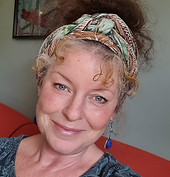
Soul guardianship
with Zoe Toussaint‑Winchcombe

As a grief guardian, I stand at the threshold of your sorrow with steadiness and reverence. My role is not to direct or fix, but to protect the integrity of the space so that whatever needs to rise can do so safely.
I hold the perimeter with care - honouring boundaries, witnessing without
intrusion, and safeguarding the pace and rhythm of your unfolding.
In this guardianship, my presence becomes a quiet shelter, offering the assurance:
“You may unravel here. Nothing will harm you in this space.”
This is threshold work - tending the container so grief can
move in its own wild, holy way.

Soul Guardianship & Transformational Support
Gentle, intuitive accompaniment through thresholds of change - death, rebirth, endings, beginnings, and the quieter transitions that shape a life.
Alongside grief tending and soul work, I offer a range of grounded, therapeutic modalities that many people come for as standalone sessions. Each one supports the body, heart, and nervous system in its own way.
Modalities Offered
-
Soul Readings & Guidance - Intuitive insight, energetic reflection, and spiritual counsel to support clarity, alignment, and inner truth. A gentle space to hear yourself more deeply.
-
Transformational Support. Emotional integration and embodied processing for times of change, overwhelm, or inner transition. A steady presence to help you meet what is rising.
-
Bodywork & Deep Intuitive Massage. Therapeutic, nurturing touch to release tension, emotional holding, and long‑carried stress. This may include deep tissue work, intuitive massage, or gentle somatic unwinding — depending on what your body needs.
-
Nervous System Regulation - Cranial base work and subtle pressure beneath the skull to support grounding, calm, and regulation. Helpful for overwhelm, fatigue, anxiety, and chronic stress.
-
Breathwork & Ritual Care . Simple, accessible practices to support transitions, soften contraction, and reconnect you with your inner rhythm.
-
Spiritual Companionship . Presence, listening, and gentle guidance through times of uncertainty, grief, awakening, or inner change.
-
Cyclical Living Support . Reconnecting you with your natural rhythms; emotional, energetic, and seasonal, for more empowered, embodied living.
Each session is a living response to what your soul and body are calling for — woven with reverence, steadiness, and deep witnessing.


Stewardship is the tending of the ongoing landscape of grief. Here, I accompany the long arc: the seasons, cycles, and returns that shape a person’s healing.
I nurture continuity, support ritual and meaning‑making, and honour grief as a living process rather than a moment. As a steward, I walk alongside you with gentleness and attunement, offering the steady message: “I will tend this with you. You do not have to carry it alone.”
This is the work of the gardener - tending roots, honouring seasons, and trusting the intelligence of grief.
My work weaves guardianship and stewardship into the art of holding therapeutic space. This is a field where your inner world can unfold without judgement, pressure, or interruption. A space that is spacious yet contained, grounded yet responsive, quiet yet deeply attuned.
Here, I offer:
- Presence instead of solutions
- Witnessing instead of analysis
- Compassion instead of direction
- Permission instead of expectation
Holding space means meeting you exactly where you are, trusting that grief is not a problem to be solved but a truth to be honoured. In this space, I become both guardian and steward, protector of the threshold and tender of the journey.
If you feel you need a safe, steady place to be with your grief, a space where you can soften, unravel, or simply breathe , you are warmly invited to reach out.
I offer sessions online as well as in person, depending on what feels most supportive for you.
When you reach out, I offer a free 20‑minute clarity call so we can both feel into:
- the resonance between us.
- what you are carrying and what you are seeking
- how I can support you in a holistic, soul‑centred way.
- whether the rhythm and timing feel right for your process
The trust and safety of the space are foundational to how I work — you are met with steadiness, presence, and deep care from the very beginning. This call simply allows you to sense whether my way of working feels right for you and whether the holistic approach I offer aligns with what you need at this moment in your grief.


You can contact me at the following:
Email: zoe.toussaint@yahoo.co.uk
Phone: 07762 902575
Or leave a message via WhatsApp.
Payment
I work independently and wholeheartedly, offering my time, presence, and skill with deep care. To honour both the value of this work and the varied circumstances people may be navigating, I offer a sliding scale for sessions.
Standard Rates
- In-person session: £75 for 80 minutes
Double session: 2 hrs 20 mins, £120.
- Online session: £55 for 60 minutes
These rates reflect the depth, preparation, and energetic holding that this work requires.
Sliding Scale – PLEASE NOTE: THIS IS AVAILABLE FOR GRIEF WORK ONLY
For those who need more flexibility, you are welcome to choose a contribution that feels manageable for you, starting from £35. This approach allows the work to remain accessible while also respecting the integrity of my practice and the livelihood that sustains it.
If you’re unsure where to place yourself on the scale, I invite you to choose a figure that reflects both your current situation and the value you feel you receive from our time together. Your honesty and self‑attunement help keep this offering available to all who need it.
Block Payments
For those who feel called into a steadier rhythm of support, I offer block payments. This creates continuity, deepens the work, and offers a sense of being held across a defined period.
A block might look like:
- Three sessions over six weeks
- A weekly or fortnightly rhythm
- A slower, spacious unfolding with longer pauses between sessions
We shape the timing together, based on what feels supportive and sustainable for your process. Block payments can be made in full at the beginning of our work together or in two instalments if that feels more manageable.
Support Between Sessions
Grief does not wait for a scheduled appointment. It moves in waves — sudden, tender, wild, and unpredictable.
Because of this, I offer audio support between sessions. This includes:
- one voice note or audio message between each session
- a way to reach out when something arises unexpectedly
- a gentle bridge of support in the in‑between spaces
This is not ongoing daily messaging but a held, boundaried extension of the work - a reminder that you are not alone in the moments that matter.
With love and warm comfort
Zoe x